

After two years marked by a fight against covid-19, a gradual return to "normalcy" was in sight. However, the war that broke out in Ukraine exacerbated the economic and social instability felt all over the globe. Times have been unpredictable. Even so, recent data published by the Economic Outlook of the Organization for Economic Cooperation and Development (OECD), released in November, shows that Portugal will grow twice as much as the Euro Zone in 2023.
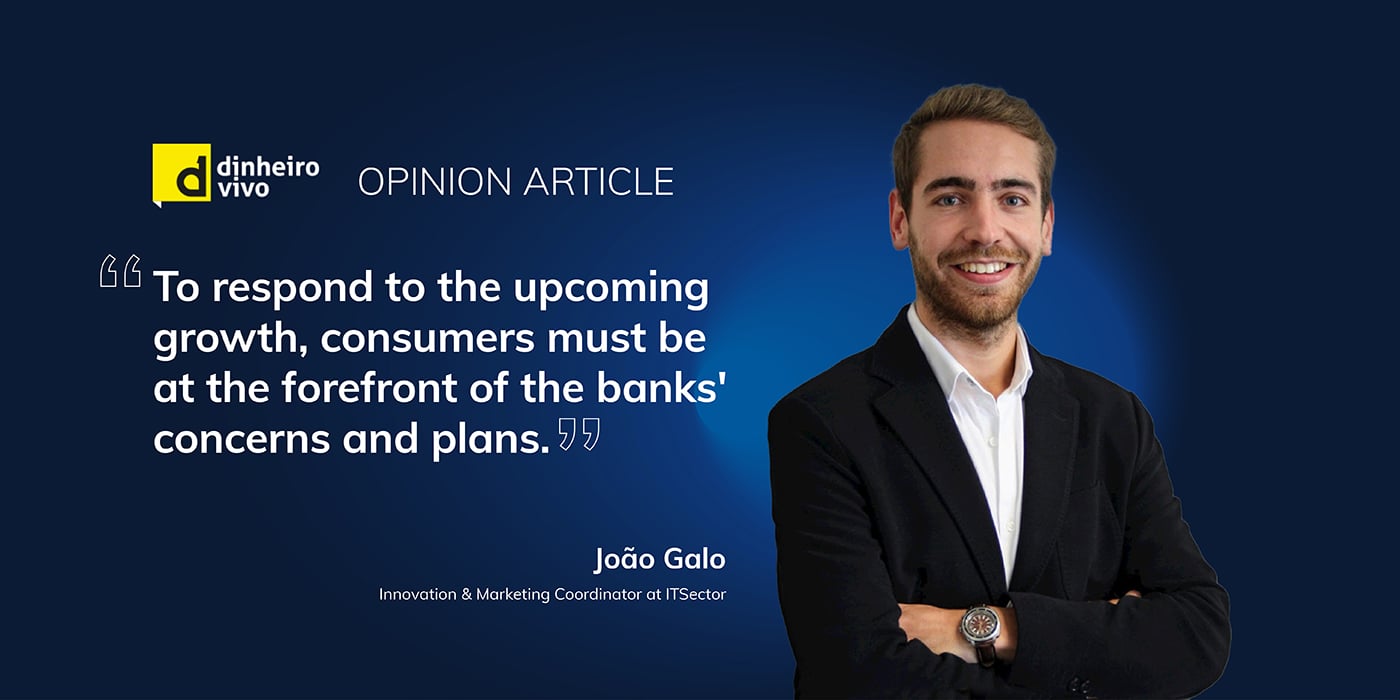
The financial industry is likewise optimistic, meaning that banks need to be prepared. To respond to the upcoming growth, consumers must be at the forefront of the banks' concerns and plans. Specifically, providing better banking experiences is the key to increasing client satisfaction. The greater attention paid to this trend will not only, define the coming year but also help banks stand out from other economic sectors.
So how can banks provide distinctive user experiences? Financial institutions must, on the one hand, invest in the implementation of fully digital processes that enable them to give consumers promptly, effective, and secure responses whenever and wherever they need them with just a few clicks. To make daily transactions even simpler, this new approach to doing business online should highlight other technologies, such as the personal computer, in addition to mobile devices.
In order to ease both the consumer's journey across the different points of contact with banks and the fluidity in the aggregation of data, this transformation should also entail a commitment to the digitization of processes in the offline communication channels. This is the only way to ensure that every consumer has a truly unique experience that goes beyond personalization.
The consolidation of open banking, a system that encourages the flow of financial data between banking institutions, is also required for this customization to become “The” reality in 2023. With lower costs and greater client transparency, it will be possible to offer specialized financial products and services. This advantage is simple to picture in real life. Let's say a specific website only permits payment through Bank X, but a particular customer has an account with Bank Y. Through an open banking system, the user consents to the bank he/she/it uses to conduct the transaction to exchange information with Bank X.
The benefit for banks is the diversification of revenue sources as a result of bringing in new clients via the organizations with which they maintain relationships and retaining current clients through the offering of enhanced services.
The benefits are promising for both customers and banking entities, and they allow us to foresee that the centrality of the consumers' user experience will be one of the major drivers of the financial sector in 2023.
News: Dinheiro Vivo

Terms & Conditions