
_Inside%20News_1400x700px.jpg?width=1400&height=700&name=Opinion%20Article%20Paulo%20Noorm%20(2023)_Inside%20News_1400x700px.jpg)
The latest stream of news and announcements concerning the new variables of generative Artificial Intelligence (AI) has brought a storm of overstatements and fears concerning the topic. OpenAI's ChatGPT seemed to be becoming a part of society, and now, since the release of the newer version, GPT-4, we have witnessed a leap towards the democratisation of AI: with enough generative text to write a book, the ability to code in all programming languages and, most impressively, image decoding.
First, we felt the "fright". Opinions that these new tools (LLMS) could replace a diversity of professions overnight started to come up. Nevertheless, we can relax, robots are not yet ready to replace human labour completely. However, language models, such as ChatGPT, could act as an accelerator - operating at high velocity on a large scale - with the potential to benefit the labour market and society. Essentially, the more we feed these models with data and questions, the faster they "learn" to predict results. Currently, some start-ups claim to use these tools to create new products that can revolutionise society, from legal administration to stock trading, games and medical diagnostics, even though the reality is that curiosity has mainly led some to seek ChatGPT to help them with questions such as writing poems or to test a system out to its error.
Today with these new platforms, we have started to feel a democratisation of access to Artificial Intelligence across society. If not long ago, the implementation and execution of AI systems were only within reach of a select few, they are now at a distance of a click for registering in a platform, whether for personal use or work-related. Conscious of the importance of taking the lead in this growing tendency, other companies, such as Google, are quick to mark their presence and are already preparing the launch of platforms to compete with ChatGPT.
Such free platforms enable the creation of much more convincing phishing e-mails and the script of more advanced malware, meaning they are not risk-free. It is not surprising some financial institutions are not open to testing this technology, at least for now. Promoting a customer-centric experience based on transparency and trust is crucial for industries where confidentiality is paramount. In sectors such as banking, it is essential to invest in 100% reliable technology providers who can offer high-tech solutions that protect their customers from these threats.
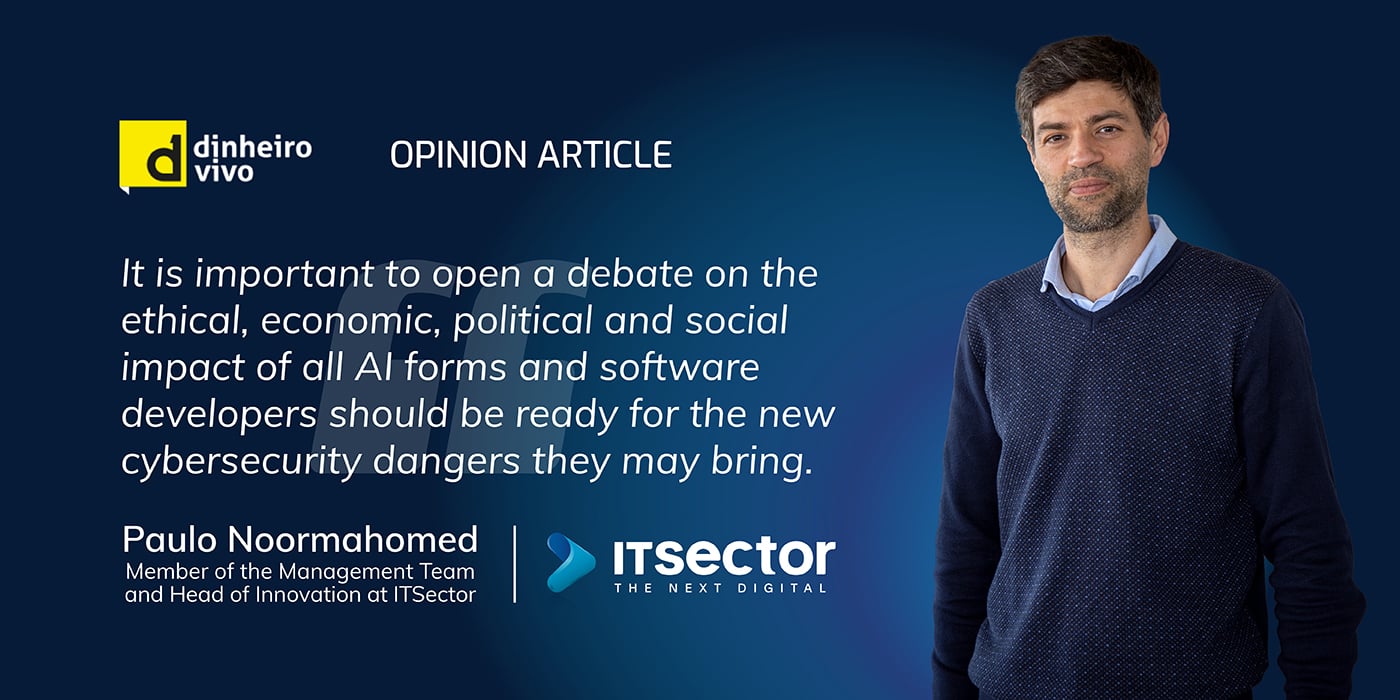
I believe it is still early to give these new platforms too much credit, for they still need to evolve to start playing a dominant role in society. The influence of all forms of AI on the ethical, economic, political, and social spheres should be discussed in light of these recent technologies, and software developers need to be prepared for any new cybersecurity risks they may provide.
News: Dinheiro Vivo

SHARE
SHARE
Terms & Conditions
Terms and Conditions ("Terms") Last updated: July 09, 2015
Please read these Terms and Conditions ("Terms", "Terms and Conditions") carefully before using the www.itsector.pt website (the "Service") operated by ITSector ("us", "we", or "our"). Your access to and use of the Service is conditioned upon your acceptance and compliance with these Terms.
These Terms apply to all visitors, users and others who access or use the Service. By accessing or using the Service you agree and are bound by these Terms. If you disagree with any part of these terms, then you may not access the Service. Links to other websites. Our Service may contain links to third-party websites or services that are not owned or controlled by ITSector. ITSector has no control over, and assumes no responsibility or liability for the content, privacy policies, practices, or services of any third-party websites. You further acknowledge and agree that ITSector shall not be responsible or liable, directly, or indirectly, for any damage or loss caused or alleged to be caused by or in connection with use of or reliance on any such content, goods, or services available on or through any such websites or services. We strongly advise you to read the terms and conditions and privacy policies of any third-party websites or services that you visit.
Termination. We may terminate or suspend access to our Service immediately, without prior notice or liability, for any reason, including without limitation if you breach the Terms. All provisions of the Terms which by their nature are not terminated shall survive, including, without limitation, ownership provisions, warranty disclaimers, indemnity, and limitations of liability.
Governing Law. These Terms shall be governed and construed in accordance with the laws of Portugal, without regard to its conflict of law provisions. Our failure to enforce any right or provision of these Terms will not be considered a waiver of those rights. If any provision of these Terms is held to be invalid or unenforceable by a court, the remaining provisions of these Terms will remain in effect. These Terms constitute the entire agreement between us regarding our Service and supersede and replace any prior agreements we might have between us regarding the Service.
Changes. We reserve the right, at our sole discretion, to modify or replace these Terms at any time. In the event of a material revision, we will attempt to provide at least 15 days’ notice prior to any new terms taking effect. What constitutes a material change will be determined at our sole discretion. By continuing to access or use our Service after those revisions become effective, you agree to be bound by the revised terms. If you do not agree to the new terms, please stop using the Service.